

Protected Education Is a Core Part of the Fellowship
At the Surgical Critical Care Fellowship at NewYork-Presbyterian/Weill Cornell Medical Center, education is intentionally integrated into the training experience. Fellows receive a minimum of four hours of protected educational time each week, ensuring dedicated opportunities for learning, professional development, and academic growth.
This structured educational curriculum complements the extensive bedside teaching that occurs daily during Surgical Intensive Care Unit (SICU) rounds, where faculty provide real-time instruction and mentorship in the management of critically ill surgical patients.
Learning at the Bedside
Education extends beyond the conference room. Fellows participate in multidisciplinary SICU rounds where clinical decision-making, procedural skills, evidence-based practice, and leadership principles are taught in the context of patient care.
Bedside teaching focuses on:
- Clinical reasoning and critical thinking
- Advanced hemodynamic management
- Mechanical ventilation and respiratory support
- Multidisciplinary team leadership
- Family communication and goals-of-care discussions
- Quality and safety in critical care practice
This combination of formal education and experiential learning creates a comprehensive training environment that prepares fellows for independent practice.
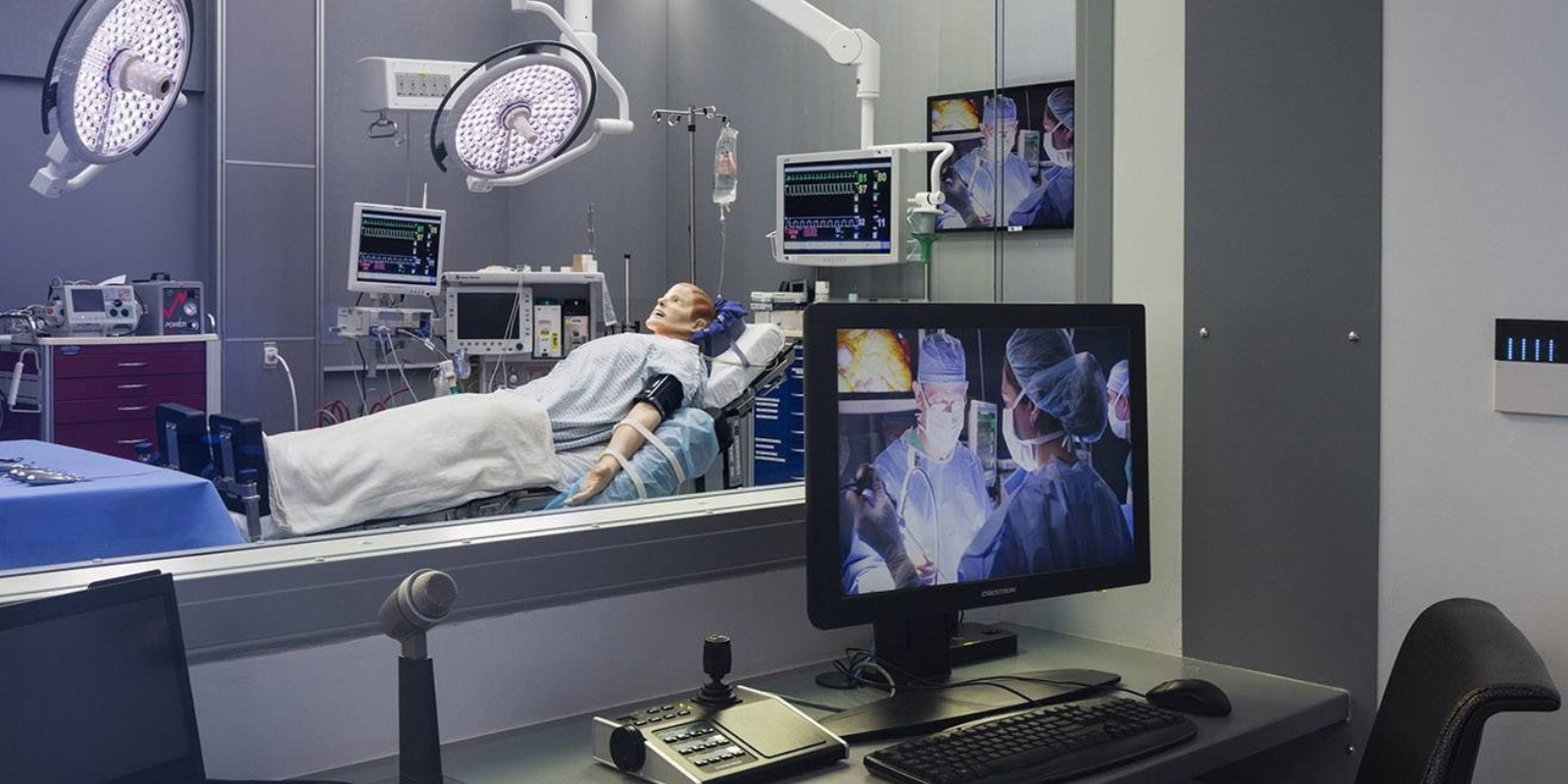
SAIL Simulation Center
Skills Acquisition & Innovation Laboratory (SAIL)
Simulation-based education is an integral component of the fellowship curriculum. Fellows utilize the Skills Acquisition & Innovation Laboratory (SAIL), a state-of-the-art simulation center designed to enhance clinical skills, teamwork, and crisis management.
Through high-fidelity simulation training, fellows participate in realistic clinical scenarios that allow them to:
- Practice critical care procedures
- Refine airway management techniques
- Manage complex emergencies
- Improve team communication and leadership skills
- Develop crisis resource management strategies
- Enhance patient safety through deliberate practice
Simulation sessions provide a safe environment for learning, allowing fellows to build confidence and competence before applying these skills in the clinical setting.
Comprehensive Educational Conferences
The fellowship offers a robust conference schedule designed to reinforce core principles of surgical critical care, trauma surgery, and acute care surgery.
Departmental Conferences
Fellows participate in:
- Department of Surgery Grand Rounds
- Morbidity and Mortality (M&M) Conference
- Trauma Review Conference
- Acute Care Surgery Case Conference
- Multidisciplinary SICU Conference
These sessions foster collaborative learning, promote evidence-based practice, and provide opportunities to discuss complex patient cases.
Critical Care Didactics and Professional Development
The educational curriculum includes a wide variety of specialty-focused learning opportunities, including:
Critical Care Lecture and Workshop Series
A structured series covering:
- Surgical critical care fundamentals
- Advanced physiology
- Organ support strategies
- Trauma resuscitation
- Emerging critical care technologies
- Evidence-based management of critical illness
Journal Clubs and Research Conferences
Fellows critically evaluate current literature, learn research methodologies, and participate in scholarly discussions that promote lifelong learning and academic development.
Quality Improvement and SICU M&M
Dedicated conferences emphasize:
- Patient safety
- Systems-based practice
- Performance improvement
- Root cause analysis
- Healthcare quality initiatives
SCORE and Oral Board Preparation
Fellows receive focused preparation for future board certification through curriculum-based review sessions, case discussions, and oral examination practice.
Building Future Leaders in Surgical Critical Care
The fellowship's educational philosophy is grounded in the belief that outstanding intensivists are developed through a combination of clinical experience, structured teaching, simulation, and mentorship. By integrating protected educational time, bedside instruction, simulation-based learning, and multidisciplinary conferences, the program prepares fellows to become skilled clinicians, educators, researchers, and leaders in surgical critical care.
Whether managing complex patients in the SICU, participating in a multidisciplinary conference, or honing skills in the SAIL simulation laboratory, fellows benefit from a comprehensive educational experience designed to support success throughout their careers.