

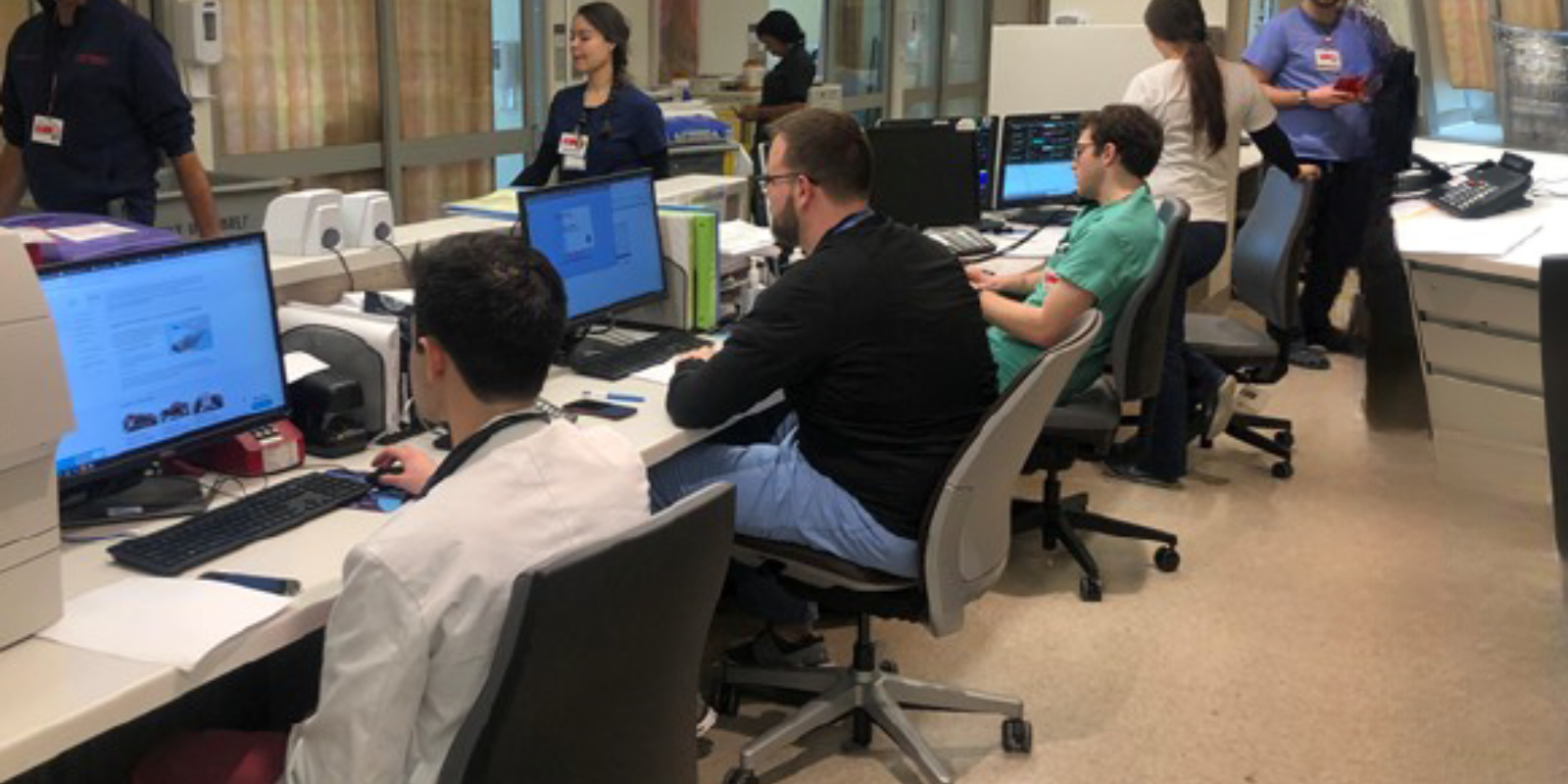
Bedside Learning in a Multidisciplinary Surgical ICU
The Surgical Critical Care Fellowship at NewYork-Presbyterian/Weill Cornell Medical Center is centered around an immersive experience in the 20-bed Surgical Intensive Care Unit (SICU). As the cornerstone of fellowship training, the SICU provides fellows with high-acuity clinical exposure, progressive responsibility, and extensive bedside teaching from experienced surgical intensivists.
Fellows are integral members of a multidisciplinary care team, leading the management of critically ill surgical patients while developing the clinical judgment, procedural expertise, and leadership skills required for independent practice.
A Dynamic Learning Environment
Education in the SICU extends far beyond the classroom. Fellows participate in daily multidisciplinary rounds where bedside teaching is integrated into patient care. Faculty provide real-time instruction, emphasizing evidence-based decision-making, critical thinking, and the application of advanced critical care principles.
In addition to protected educational conferences and formal didactic sessions, the SICU offers continuous opportunities for experiential learning through direct patient management, interdisciplinary collaboration, and procedural training.
Diverse and Complex Patient Population
The SICU provides exposure to a broad range of surgical critical care conditions, including:
- Trauma and injury management
- Burn critical care
- Emergency general surgery
- Liver transplantation and transplant critical care
- Major postoperative surgical complications
- Sepsis and septic shock
- Respiratory failure
- Multisystem organ dysfunction
- Complex surgical infections
This diverse case mix ensures comprehensive preparation for careers in surgical critical care, acute care surgery, trauma surgery, and academic medicine.
What Fellows Develop
Throughout the SICU rotation, fellows cultivate the core competencies necessary to become expert surgical intensivists.
Advanced Clinical Reasoning
Fellows develop sophisticated clinical judgment and decision-making skills for the management of complex surgical critical illness. Emphasis is placed on rapid assessment, evidence-based interventions, and multidisciplinary care planning.
Hemodynamic and Respiratory Management
Training includes advanced management of critically ill patients requiring:
- Mechanical ventilation
- Hemodynamic monitoring
- Vasopressor and inotropic therapy
- Advanced resuscitation strategies
- Organ support technologies
Fellows gain confidence in managing the most challenging critical care scenarios.
Procedural Expertise
The SICU experience provides opportunities to develop and refine procedural skills commonly required in surgical critical care practice, including airway management, vascular access, bedside procedures, and advanced monitoring techniques.
Leadership and Team-Based Care
As fellows advance through the program, they assume increasing responsibility for leading multidisciplinary rounds and coordinating patient care among surgeons, consultants, nurses, pharmacists, respiratory therapists, advanced practice providers, and rehabilitation specialists.
Communication and Family-Centered Care
Effective communication is a critical component of training. Fellows learn to conduct family meetings, facilitate goals-of-care discussions, communicate complex clinical information, and support patients and families during critical illness.
Teaching and Mentorship
The SICU serves as a rich educational environment where fellows supervise and teach:
- Surgical residents
- Medical students
- Advanced practice providers
- Rotating trainees from multiple specialties
These experiences help prepare fellows for future roles as educators and academic leaders.
Quality, Safety, and Systems-Based Practice
Fellows gain an understanding of healthcare systems, patient safety initiatives, quality improvement methodologies, and resource stewardship, all of which are essential competencies for leadership in modern critical care practice.
Training for Independent Practice
The SICU experience is designed to provide graduated autonomy under the guidance of dedicated faculty mentors. By the completion of fellowship, trainees are equipped to independently manage critically ill surgical patients, lead multidisciplinary ICU teams, and deliver the highest level of evidence-based critical care.
Through intensive bedside learning, broad clinical exposure, and close faculty mentorship, the SICU at Weill Cornell Medicine provides an exceptional environment for developing the next generation of surgical intensivists and leaders in critical care medicine.